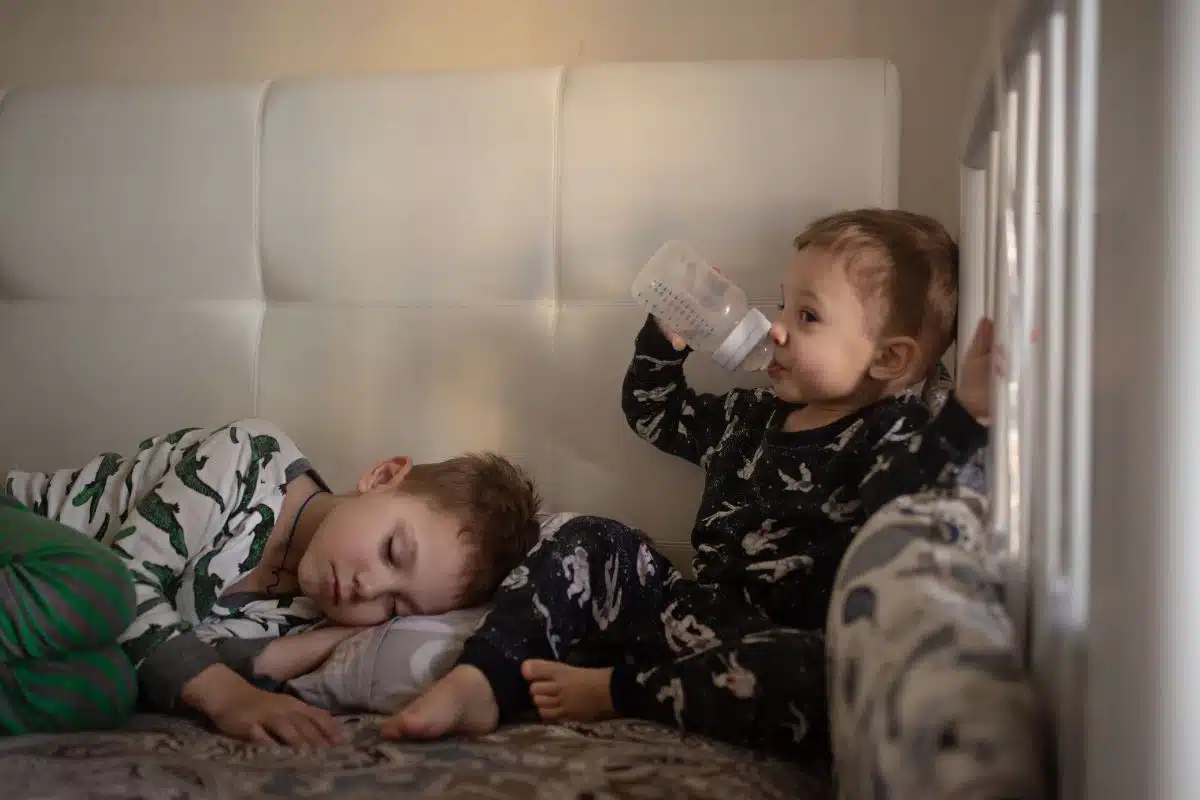
Every parent who’s tried this knows the advice is easy to give and hard to live through. “Just stop the bedtime bottle” sounds simple until you’re standing outside a screaming toddler’s door at 9 PM wondering if tonight is really the night. It’s a question we hear often from parents at our Brighton, MI practice, and the good news is that dropping the bedtime bottle doesn’t have to be a single dramatic showdown. A gradual, predictable approach works far better than going cold turkey, and it protects your toddler’s teeth in the process.
Why This Matters Beyond Just Sleep Habits
The bedtime bottle isn’t just a sleep crutch — it’s one of the biggest risk factors for early childhood tooth decay. Milk, formula, and juice left sitting against a toddler’s teeth for hours overnight gives bacteria exactly what it needs to produce the acid that wears down enamel. That’s a separate concern from the emotional side of weaning, but it’s the reason so many pediatric dentists bring this up before parents even ask.
Start With a Realistic Timeline, Not a Deadline
Trying to eliminate the bottle in one night usually backfires. A one-to-two week gradual approach tends to go smoother for everyone:
- Days 1–3: Water down the bottle contents gradually if it currently contains milk or juice, moving toward mostly water
- Days 4–7: Shift the bottle earlier in the bedtime routine instead of right before sleep, so it’s no longer the very last thing before lying down
- Days 8–10: Replace the bottle with a sippy cup of water during the routine, keeping the same steps around it (bath, book, songs) so the routine still feels familiar
- After day 10: Drop the cup from the nighttime routine entirely, leaning on the other steps (book, song, cuddle) to signal it’s time for sleep
Every toddler moves at a different pace, so treat this as a framework rather than a rigid schedule.
Keep the Ritual, Just Change the Object
A lot of bedtime bottle attachment isn’t really about the bottle — it’s about the predictable sequence of events that tells a toddler sleep is coming. That means the fastest way to lose the fight is to also strip away the rest of the routine at the same time. Keep everything else exactly the same:
- Same bath time, same pajamas, same room lighting
- Same book or short stack of books
- Same song, same phrase, same hug sequence
- Same time of night, night after night
The bottle is just one piece of a much bigger pattern. Replace that one piece while keeping everything around it stable, and toddlers generally adapt faster than parents expect.
What to Expect During the Transition
A few rough nights are normal, and it doesn’t mean the approach isn’t working:
- Your toddler may ask for the bottle by name for several nights even after the switch
- Sleep might be slightly more disrupted for the first few nights before settling back down
- Some toddlers protest more at nap time than at bedtime, or the reverse — there’s no universal pattern
- Consistency matters more than perfection; caving one night doesn’t undo the whole process, it just may extend the timeline slightly
A Few Things That Tend to Make It Harder
Some common habits can unintentionally slow this whole process down:
- Introducing the sippy cup for the first time on the same night you drop the bottle, instead of introducing it earlier during the day
- Changing multiple parts of the routine at once (new room, new bedtime, and new cup all together)
- Offering the bottle “just this once” during a rough night, which resets the pattern more than it seems to in the moment
- Waiting until a stressful period (travel, new sibling, starting daycare) to attempt the switch
When to Loop In Your Pediatric Dentist in Brighton
If your toddler already shows white spots near the gumline, dark spots, or sensitivity, that’s worth mentioning at their next visit regardless of where they are in the weaning process — those are early signs that shouldn’t wait for a routine checkup. Our team can take a quick look and let you know whether anything needs attention now versus at your child’s next scheduled cleaning.
Ready for an Easier Bedtime Routine?
Weaning off the bedtime bottle is one of those parenting milestones that feels bigger in anticipation than it usually is in practice. If you’re in Brighton, MI and want a second set of eyes on your toddler’s teeth during this transition, Dr. Birchmeier at Brighton Healthy Smiles Family Dentistry can check for early signs of decay and answer any questions specific to your child. If you’re located elsewhere, the same guidance applies — bring it up with your own pediatric dentist at your child’s next visit.
Call (810) 227-6567 to schedule your child’s next checkup.
Frequently Asked Questions
At what age should the bedtime bottle be gone completely?
Most guidance points toward weaning off bottles entirely around 12 to 18 months, though every family’s timeline looks a little different depending on the child.
Is it okay to give a bottle of plain water at bedtime?
Yes, water doesn’t carry the same decay risk as milk, formula, or juice, which is why it’s often used as a transitional step rather than an endpoint.
My toddler wakes up multiple times asking for the bottle. Is that normal?
This is a common part of the adjustment period for many toddlers and usually settles within one to two weeks as the new routine becomes familiar.
Should I switch straight to a sippy cup, or skip cups at bedtime altogether?
Either can work — some families prefer a sippy cup of water as a stepping stone, while others drop nighttime drinking altogether once the bottle is gone. What matters most is consistency with whichever choice you make.
What if my toddler already has some visible decay from bottle use?
Don’t wait for the next routine visit — a dental exam sooner rather than later can catch it while treatment is still simple.